Authentic Chimichurri Recipe
Prep Time: 15 mins | Rest Time: 30 mins | Total Time: 45 mins | Yield: Approx. 1.5 cups (8–10 servings)
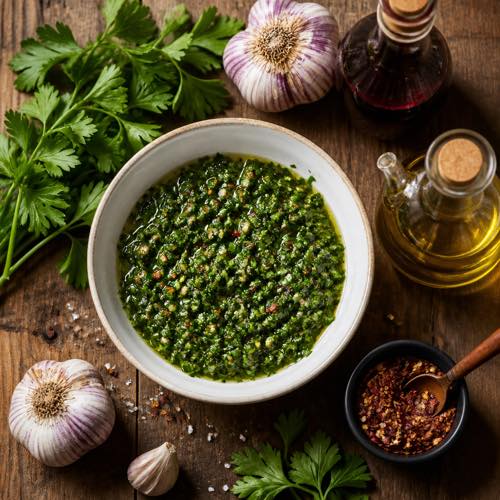
If you have ever enjoyed an authentic Argentinian asado, you know that great grilled meat is never complete without a generous spoonful of vibrant, garlicky chimichurri. Bright, herbaceous, and delightfully pungent, an authentic chimichurri recipe is the undisputed king of South American condiments. Combining fresh flat-leaf parsley, pungent minced garlic, fragrant dried oregano, tangy red wine vinegar, and rich extra-virgin olive oil, this uncooked table sauce delivers an exhilarating burst of flavor that cuts through rich steaks and grilled meats.
Many modern recipes take a shortcut by throwing ingredients into a blender, creating a pureed paste. But culinary purists know that learning how to make chimichurri the traditional way requires only a sharp chef’s knife and a cutting board. Hand-chopping the fresh herbs and garlic preserves their individual texture and clean flavor, ensuring your sauce remains loose and juicy rather than an emulsified spread.
Whether firing up your backyard grill or elevating weeknight dinners, mastering this classic chimichurri sauce recipe will transform how you season food. Let’s explore its heritage, essential ingredients, traditional techniques, and delicious ways to enjoy it!
Why You’ll Love This Recipe

There is good reason authentic chimichurri has captivated food lovers across the globe. Here is why this traditional recipe belongs in your culinary repertoire:
- Pure Herbal Freshness: Free from preservatives or thickeners, every spoonful bursts with vibrant herbal aroma and lively acidity.
- Ready in 15 Minutes: Requires zero cooking—simply chop your fresh aromatics, stir with vinegar and oil, and let the flavors meld.
- No Blender Needed: Traditional hand-chopping creates the signature textured, loose oil-and-vinegar suspension of authentic Argentinian sauce.
- Incredible Versatility: Works brilliantly as a steak topper, table condiment, bread dip, empanada sauce, or vibrant meat marinade.
- Better the Next Day: As herbs macerate in vinegar and oil, the flavors deepen and harmonize, making leftovers even tastier.
- Naturally Healthy: Naturally gluten-free, dairy-free, keto, paleo, and vegan, making it suitable for any dinner guest.
What Is Chimichurri?

Originating in Argentina and Uruguay, chimichurri is an uncooked herbal condiment born out of South America’s legendary gaucho (cowboy) culture and communal asado (open-fire barbecue) traditions. On the vast plains of the Pampas, cattle ranchers seasoned cuts of beef over wood fires, using a punchy mixture of wild herbs, garlic, salt, and vinegar to elevate the meat.
Unlike Mexican salsa verde or Italian pesto, authentic chimichurri is neither pureed nor thickened with cheese or nuts. It is a coarse, spoonable dressing where finely hand-cut herbs remain suspended in olive oil and tangy red wine vinegar. While green chimichurri (chimichurri verde) based on flat-leaf parsley is the universally recognized classic, Argentina also cherishes red chimichurri (chimichurri rojo), which adds roasted peppers, paprika, and tomatoes for smoky sweetness.
In authentic dining, chimichurri is ladled over sizzling meats straight off the grill, letting residual heat release the aromatic oils of the fresh herbs.
Ingredients for Authentic Chimichurri
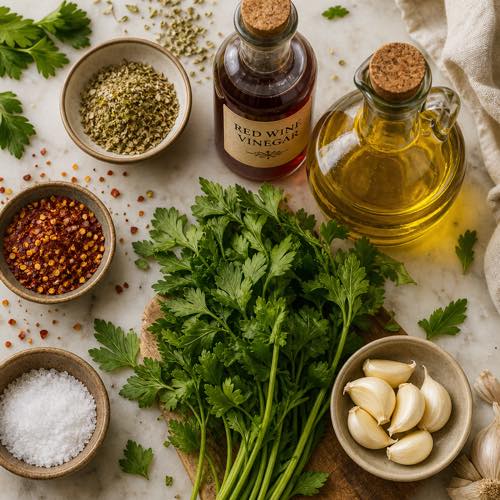
Traditional chimichurri relies on simple, unpretentious ingredients. For authentic flavor, ingredient quality is essential:
- Fresh Flat-Leaf Italian Parsley (1 large bunch / approx. 1 cup finely chopped): Provides a clean, robust, peppery foundation. Avoid curly parsley, which is tough and bitter. Wash and thoroughly dry leaves before chopping.
- Fresh Garlic (4 to 5 large cloves, finely minced): Delivers the bold, pungent backbone of the sauce. Use fresh, juicy cloves rather than pre-minced jarred garlic.
- Dried Oregano (1 tablespoon): An authentic secret! Traditional Argentinian recipes specifically call for dried oregano. Its concentrated, earthy depth blooms beautifully when rehydrated in vinegar.
- Red Wine Vinegar (1/4 cup / 60 ml): Contributes essential sharpness to cut through rich beef fat. Avoid harsh white vinegar.
- Extra-Virgin Olive Oil (1/2 cup / 120 ml): Choose a fruity extra-virgin olive oil with a smooth, buttery finish so it does not overpower the parsley.
- Crushed Red Pepper Flakes (1/2 to 1 teaspoon): Adds subtle warmth. Argentine ají molido or standard red pepper flakes provide the right gentle heat.
- Coarse Kosher Salt & Black Pepper (1 tsp salt, 1/2 tsp pepper): Enhances natural herb juices and balances garlic.
- Warm Water (2 tablespoons, optional): Many Argentine grill masters dissolve dried oregano and salt in warm water first to bloom the herbs.
Authenticity & Substitution Notes
- The Cilantro Debate: Authentic Argentinian chimichurri never contains cilantro. While popular in modern fusion, adding cilantro changes its regional identity.
- Fresh Oregano: If using fresh oregano instead of dried, double the amount to 2 tablespoons, as dried herbs are more concentrated.
Equipment You’ll Need
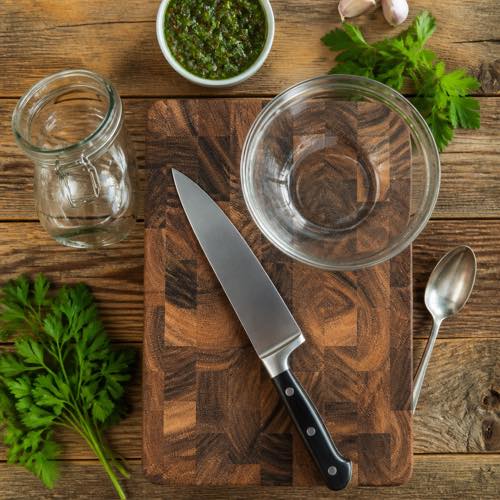
You need zero electrical appliances to make authentic chimichurri. These simple kitchen basics are all that is required:
- Heavy Wooden Cutting Board: A sturdy board gives you ample room to chop a large volume of parsley cleanly.
- Sharp 8-Inch Chef’s Knife: A razor-sharp knife slices herbs cleanly rather than crushing them, preserving vibrant green color and delicate oils.
- Glass or Ceramic Mixing Bowl: Non-reactive glass prevents vinegar from taking on an off-taste from metal surfaces.
- Mixing Spoon: For gently stirring the ingredients together without over-emulsifying the oil.
- Glass Mason Jar: Ideal for letting the sauce rest, develop flavor, and store conveniently in your refrigerator.
Step-by-Step Instructions: How to Make Chimichurri
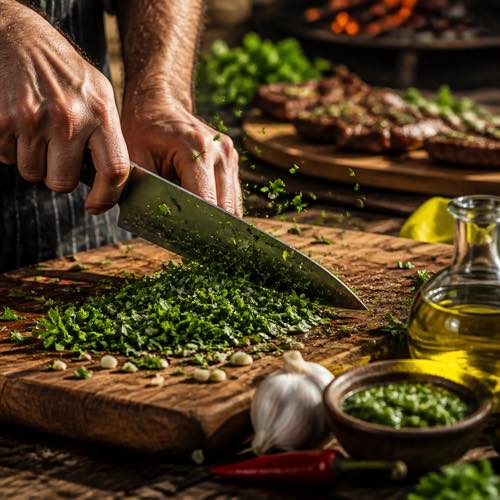
Follow these traditional steps to craft a batch of authentic hand-chopped chimichurri in minutes:
- Wash and Dry Parsley: Wash flat-leaf parsley thoroughly in cold water to remove grit. Dry completely using a salad spinner or clean tea towels. Excess water dilutes the dressing and prevents it from clinging to grilled meat.
- Finely Hand-Chop: Strip leaves from tough lower stems. Gather leaves into a tight mound on your board. Using a rocking motion with your sharp knife, finely chop the parsley into delicate flakes without mincing it into a paste. Transfer to your bowl.
- Mince the Garlic: Crush 4 to 5 garlic cloves flat with your knife, peel, and finely mince into tiny uniform bits. Add directly to the chopped parsley.
- Bloom Dried Oregano: Add 1 tablespoon dried oregano, 1/2 to 1 teaspoon red pepper flakes, 1 teaspoon kosher salt, and 1/2 teaspoon black pepper. Pour in 2 tablespoons of warm water and stir, letting the dried herbs soften for 2 minutes.
- Add Vinegar and Macerate: Pour in 1/4 cup red wine vinegar. Stir well and let rest for 5 minutes. The vinegar’s acid tames raw garlic sharpness while drawing out aromatic herb oils.
- Stir in Olive Oil: Add 1/2 cup extra-virgin olive oil. Stir gently with a spoon until herbs are evenly suspended. Avoid vigorous whisking; the sauce should remain a loose, spoonable mixture.
- Rest Before Serving: Cover and let rest at room temperature for at least 30 minutes (or up to 2 hours). Resting allows flavors to meld into a cohesive, mouthwatering sauce.
Tips for Authentic Chimichurri

Achieving authentic steakhouse-quality chimichurri comes down to respecting a few traditional culinary secrets:
- Hand-Chopping vs. Blending: Never use a food processor or blender! Spinning blades pulverize parsley cells, releasing bitter chlorophyll that turns the sauce muddy. High-speed blades also oxidize extra-virgin olive oil, making it unpleasantly bitter and creating an unwanted thick emulsion. Hand-chopping preserves rustic texture and clean flavor.
- Never Skip the Rest: Freshly combined chimichurri can taste sharp and disjointed. A 30-minute rest at room temperature allows salt to dissolve, oregano to hydrate, and raw garlic to mellow into the vinegar.
- Maintain Proper Ratios: Chimichurri is an herb sauce, not seasoned oil. A spoonful should yield a dense, colorful cluster of herbs glistened with vinaigrette.
- Serve at Room Temperature: Cold temperatures solidify olive oil in the fridge. Remove the jar 30 minutes before serving so the oil liquefies and releases its full aroma.
- Adjust Tang: Taste before serving. Add an extra teaspoon of vinegar for more tang, or a drizzle of oil if the acidity feels too sharp.
Green vs. Red Chimichurri

While emerald green chimichurri (chimichurri verde) is universally celebrated, Argentinian cuisine also cherishes its smoky counterpart: red chimichurri (chimichurri rojo).
Red chimichurri shares the classic parsley, garlic, and vinegar base, but introduces warm, smoky elements. It incorporates smoked Spanish paprika (pimentón), ground cumin, finely minced roasted red bell peppers, and occasionally grated tomato or tomato paste. The result is a deep crimson sauce with smoky sweetness that pairs magnificently with grilled sausages, pork chops, and roasted lamb.
To make red chimichurri from this recipe, simply stir in 1 teaspoon smoked paprika, 1/4 teaspoon ground cumin, and 2 tablespoons finely minced roasted red peppers.
Delicious Variations & Flavor Twists

While traditional chimichurri follows a classic formula, you can easily adapt the flavor to complement different dishes:
- Spicy Chili Chimichurri: Finely mince a fresh red Fresno chili or jalapeño and stir in with the dried flakes for a lingering spicy kick.
- Cilantro-Parsley Twist: Replace half of the parsley with fresh cilantro. This adds a citrusy punch popular for skirt steak tacos and grilled chicken.
- Zesty Citrus Chimichurri: Swap half of the vinegar for fresh lime or lemon juice, adding 1/2 teaspoon lemon zest for a vibrant seafood pairing.
- Roasted Garlic Variation: Replace raw garlic with 6 cloves of caramelized roasted garlic mashed into a smooth paste for a sweeter, milder flavor.
- Mint & Thyme Blend: Stir in a tablespoon of minced fresh mint and thyme. This herbal profile pairs exquisitely with grilled lamb chops.
What to Serve with Chimichurri

Chimichurri is famously paired with beef, but its bright acidity and herbal depth enhance a wide variety of meals:
- Grilled Beef & Steaks: The classic pairing for flank steak, skirt steak, ribeye, tenderloin, and short ribs. Vinegar cuts through rich beef fat effortlessly.
- Grilled Chicken & Pork: Spoon generously over grilled chicken thighs or seared pork tenderloin to keep lean meats succulent and flavorful.
- Seafood & Fish: Drizzle over pan-seared salmon, grilled swordfish, or jumbo shrimp skewers for a vibrant culinary upgrade.
- Empanadas & Crusty Bread: Serve in ramekins alongside warm meat empanadas or crusty sourdough bread for dipping.
- Roasted Vegetables & Potatoes: Toss with crispy roasted rosemary potatoes, charred asparagus, or grilled zucchini to brighten side dishes.
- Steak Marinade: Use 1/2 cup as an overnight marinade for flank steak; vinegar naturally tenderizes while infusing deep flavor.
How to Store Chimichurri
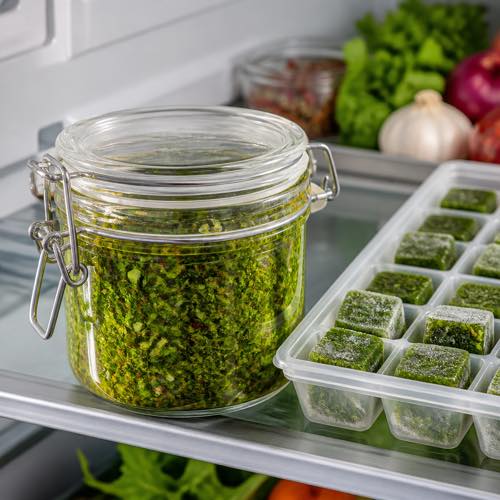
Chimichurri stores remarkably well, making it a fantastic make-ahead condiment for weeknight meals and backyard barbecues:
- Refrigeration (1 to 2 Weeks): Store chimichurri in a sealed glass mason jar in the fridge. Ensure herbs are submerged under a thin layer of olive oil to prevent oxidation and browning.
- Flavor Deepens Overnight: Sitting in the fridge for 24 hours allows garlic to mellow, oregano to hydrate, and vinegar to cure the parsley, creating even richer flavor on days two and three.
- Olive Oil Solidification: Extra-virgin olive oil solidifies when chilled. Remove the jar 30 minutes before serving to let the oil liquefy, then stir gently.
- Freezing (Up to 3 Months): Spoon chimichurri into silicone ice cube trays and freeze until solid. Transfer cubes to a freezer bag. Thaw individual portions at room temperature whenever needed.
Frequently Asked Questions

Here are answers to common questions about crafting authentic chimichurri at home:
What is authentic chimichurri used for?
In Argentina, chimichurri is primarily a table condiment spooned over grilled meats straight from the barbecue. Its balanced acidity also makes it wonderful as a marinade, salad dressing base, sandwich spread, or dip for warm bread and empanadas.
Can I make chimichurri in a food processor or blender?
While possible, authentic chimichurri is strictly hand-chopped. Blenders puree herbs into a paste, release bitter chlorophyll, and turn olive oil bitter through rapid emulsification. Hand-chopping takes only minutes and delivers far superior texture.
How long does fresh chimichurri last?
Thanks to red wine vinegar, salt, and olive oil, chimichurri keeps for 1 to 2 weeks in an airtight jar in the refrigerator. The parsley may darken slightly, but the flavor remains fantastic.
What is the difference between green and red chimichurri?
Green chimichurri (chimichurri verde) is herb-forward with flat-leaf parsley, garlic, oregano, and vinegar. Red chimichurri (chimichurri rojo) adds smoked paprika, roasted red peppers, and tomato for a deeper, smokier flavor.
Conclusion

Mastering this authentic chimichurri recipe is one of the most rewarding additions to your home cooking skills. With fresh flat-leaf parsley, garlic cloves, dried oregano, vinegar, and olive oil, you can create a world-class condiment in under fifteen minutes.
By skipping the blender and embracing traditional hand-chopping, you preserve the vibrant textures, aromatic oils, and zesty bite that make real Argentinian chimichurri legendary. Keep a fresh jar in your fridge, fire up the grill, and enjoy authentic chimichurri tonight!